How Retailers Detect Automated Buyers
Discover how retailers detect automated buyers using IP monitoring, behavior analysis, and more. Learn about Quantum Proxies' solutions to navigate these challenges effectively.
How Retailers Detect Automated Buyers
In today's fast-paced e-commerce environment, automated buyers, commonly known as bots, pose a significant challenge. These bots can purchase limited-stock items within seconds, making it difficult for genuine customers to compete. Retailers have developed sophisticated methods to detect and block these automated purchases, ensuring fair access to their products.
Understanding how retailers detect these automated buyers is crucial not only for protecting inventory but also for businesses that wish to automate tasks compliantly. Quantum Proxies provides solutions that help navigate these challenges effectively.
The Role of IP Monitoring in Detecting Bots
IP monitoring is one of the primary methods retailers use to identify bots. By tracking the IP addresses accessing their websites, retailers can spot unusual traffic patterns, such as a large volume of requests from a single IP address. This can indicate the presence of automated scripts attempting to purchase items quickly.
- Identifying high traffic from a single IP
- Tracking multiple requests in short intervals
- Flagging suspicious IP addresses for review

Behavior Analysis: Tracking User Interactions
Behavior analysis involves examining user interactions on a website to detect patterns typical of bots. This includes monitoring rapid clicks, scrolling speeds, and purchase timings that are not characteristic of human behavior. Quantum Proxies can help businesses simulate human-like interactions to avoid detection.
- Tracking rapid successive clicks
- Monitoring scrolling patterns
- Analyzing purchase timing and frequency
Understanding user behavior is key to distinguishing between bots and genuine customers.
Device Fingerprinting: More Than Just Cookies
Device fingerprinting goes beyond simple cookies to identify unique device characteristics. Retailers can use this technique to detect multiple accounts being accessed from the same device. This method is particularly effective against bots that manipulate cookies to appear as different users.
Quantum Proxies offers solutions that enable businesses to manage multiple accounts seamlessly without triggering device fingerprinting alerts.
CAPTCHAs and Challenges: Human Verification
CAPTCHAs are widely used by retailers to verify whether a user is human. These challenges, which can include tasks like identifying images or solving puzzles, are designed to be simple for humans but difficult for bots. Incorporating CAPTCHAs effectively can reduce bot activity significantly.
With Quantum Proxies, you can configure settings to navigate CAPTCHA systems without compromising on automation tasks.
Implementing Best Practices
To ensure effective detection and prevention of automated buyers, retailers must implement best practices in their security protocols. This includes regular updates to their detection algorithms and maintaining a balance between user experience and security measures.
- Regularly update detection algorithms
- Balance security with user experience
- Educate customers about security measures
With Quantum Proxies, businesses can stay ahead of automated threats while maintaining compliance with industry standards.
Conclusion
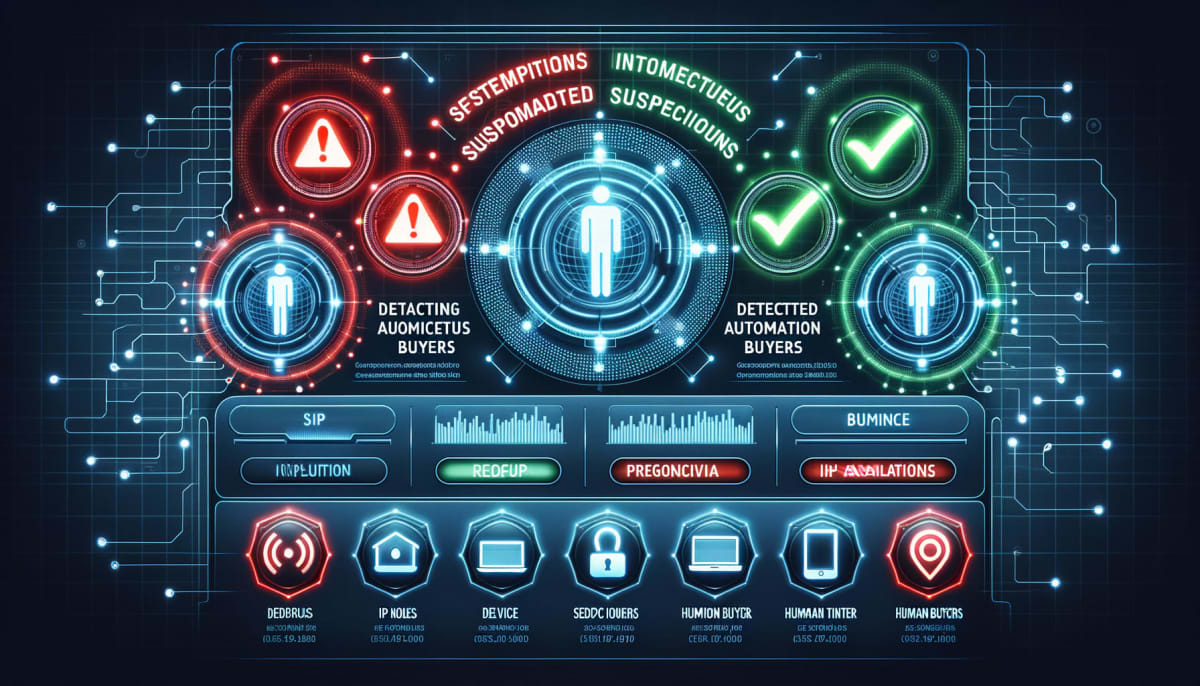
Detecting automated buyers is a complex task that requires a multi-layered approach. Retailers must employ a combination of IP monitoring, behavior analysis, device fingerprinting, and CAPTCHA challenges to protect their inventory. By leveraging the expertise and technology provided by Quantum Proxies, businesses can effectively manage automated buying threats while maintaining a seamless customer experience.
As the e-commerce landscape continues to evolve, staying informed about the latest detection methods and utilizing cutting-edge solutions like Quantum Proxies will be key to success.